Quarter close: what the first 12 weeks built
Twelve issues in: credibility isn't performed, it's assigned. What the first quarter revealed, and how to act on it before Q2.
A collection of ideas on leadership, credibility, transformation, AI, and the future of work, written for leaders, high performers, and those who aspire to carry greater responsibility.
Authenticity and capability - combined, visible, and legible to the people who matter - outperforms performance every time. Not performance as in results. Performance as in the managed version of yourself you put on for rooms that make you feel like you have to earn your place in them.
Read the article →
Twelve issues in: credibility isn't performed, it's assigned. What the first quarter revealed, and how to act on it before Q2.
what happens when structure is sound but nobody inside it is actually being trusted to use their judgement, and what that costs organisations that are leaning harder into process as complexity increases.

THE CREDIBILITY BRIEF Issue 012 THE INSIGHT Most leaders do not have a credibility strategy. They have a work ethic. They produce
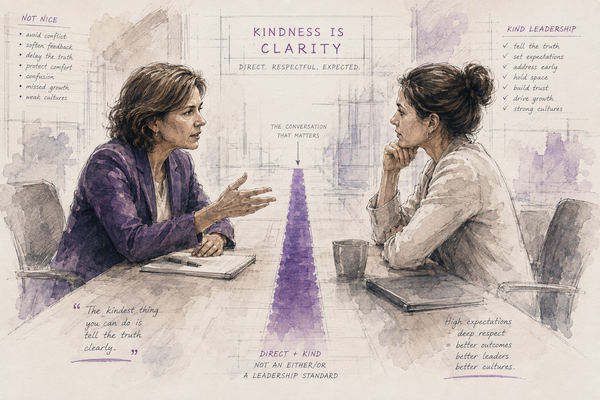
The nice action is actually an unkind action. One step further, the nice action isn’t altruistic. It’s not really being done for the other person; it’s being done because you don’t want to be uncomfortable.
Reliability is a genuine organisational asset and it earns real credibility in the earlier stages of a career. But at a certain point, it stops compounding. The shift from reliable executor to credible strategic voice is about what becomes visible.
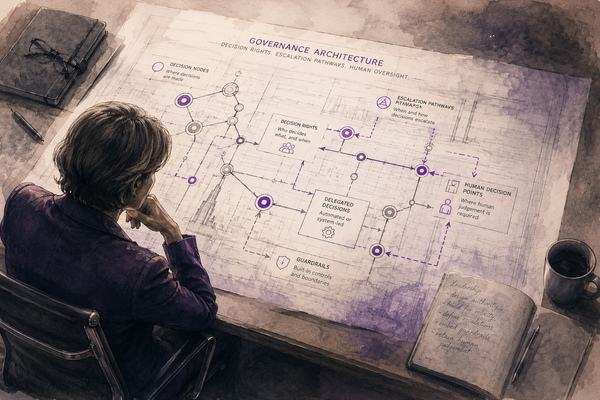
Governance as a meeting is a norm worth rewriting. Governance as architecture is what replaces it.
Disagreement handled well is a credibility accelerant. Disagreement handled poorly is a credibility tax. The issue is not whether to disagree, it's how to frame it as analysis rather than noise.
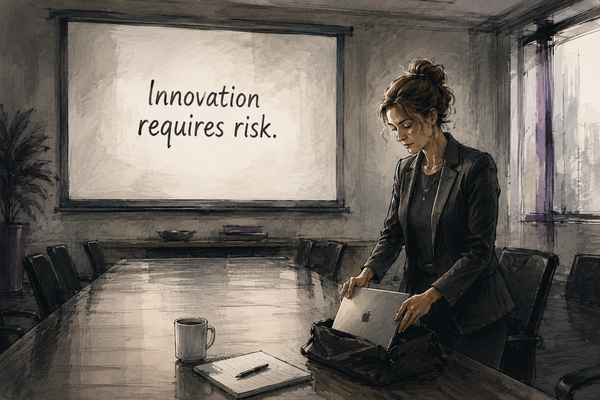
For years I've told leaders to embrace failure as the cost of building anything new. Then a few people asked if I'd really give up a steady income to go out on my own, and I caught myself holding my own risk to a harder standard than theirs.
Attribution is not automatic. It is built from a record, and records require entries made before the final moment, not reconstructed from it.
People don't resist change, they resist ambiguity: not knowing if they'll still belong, still matter. Change management handles the mechanics. Leadership creates clarity from uncertainty, and gives people real agency in how they move through it.